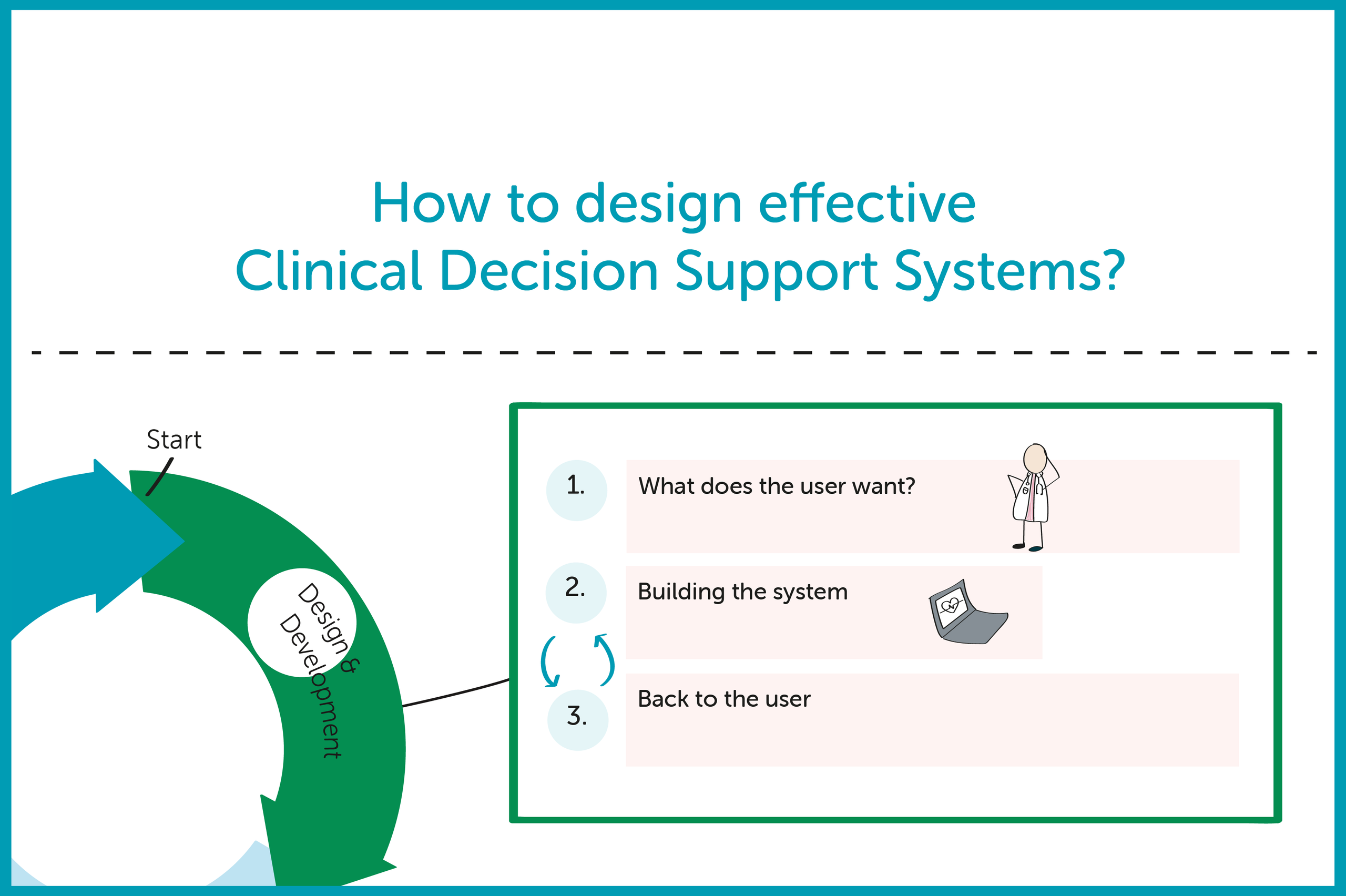
Stephanie Medlock, assistant professor at the department of Medical Informatics, studies the effectiveness of Clinical Decision Support Systems (CDSS).
“If we understand what makes a CDSS effective (or ineffective), we can design better systems in the future. It is almost impossible to imagine modern medicine without clinical decision support. Rule-based medication safety alerts are an essential pillar of patient safety. However, in practice, we know that 50-95% of alerts are overridden, and that most of these overrides are justifiable. We see similar numbers for more complex systems. There is no simple “recipe” for a good CDSS. However, quantitative research on alert handling behavior can give us an indication of what “ingredients” are important, and qualitative research can give us insights into how those factors interact to influence user behavior, decisions, and ultimately patient outcomes.”
Curious? Read the interview and explore the visual summary.